
Resources
How to teach a 5 to 8 year old to save money
Young kids learn to save when saving is short, visible, and their own choice. Let them pick one goal, make the first one reachable in 2 to 4 weeks, show their progress where they can check it, and let them buy the thing themselves when they get there. Then try a slightly bigger goal.
Why 5 to 8 is a good age to start
Around this age, most kids can count money, understand that things cost different amounts, and wait a little while for something they want. They can’t yet picture months ahead, so the trick is to keep the wait short and make every bit of progress easy to see.
Step 1: Let them choose the goal
The goal has to be something they want, not something you think they should want. A small toy, a book, a treat at a favorite place, or a trip to the park store all work. If they pick it, they’ll care about it.
Write it down and, if you can, add a picture. A picture does a lot of the work for kids who are still learning to read.
Step 2: Make the first goal short
For a first goal, aim for something they can reach in 2 to 4 weeks. Work out the weeks together by dividing the price by what they save each week:
- A $6 toy at $2 a week takes 3 weeks.
- A $10 book at $3 a week takes 4 weeks (with a little left over).
- A $20 game at $2 a week takes 10 weeks. That’s a great second or third goal, but a long first one.
Reaching the first goal quickly is what makes them want to try again.
Step 3: Make progress visible
Kids this age need to see the money grow. Pick whatever fits your family:
- A clear jar with a picture of the goal taped on the front.
- A paper chart where they color a box or a lily pad each week.
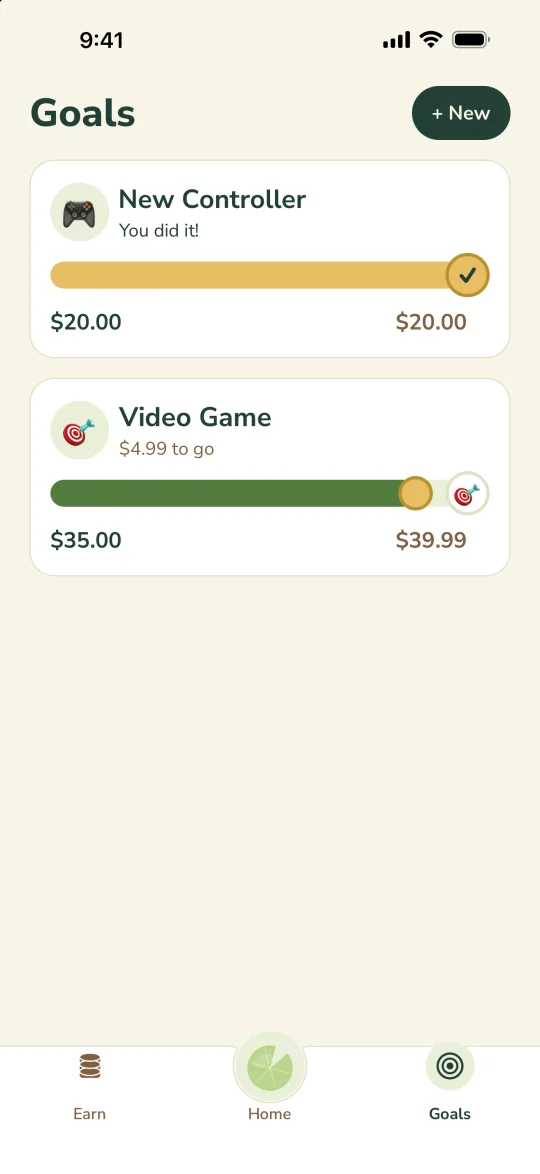
- An app with a goal picture and a progress bar they can check any time.
Step 4: Use a simple saving rule
“Save half” is easy for a young child to follow. If they earn $4, $2 goes toward the goal and $2 is theirs to spend now. They still get to enjoy some money right away, which keeps saving from feeling like a punishment.
Gift money counts too. A birthday card with $10 in it can move a goal forward weeks at a time, and that’s a fun moment to point out.
Step 5: Let them feel the choice
At some point your child will want to spend their savings on something else. Instead of saying no, show them what it does to the goal: “If you buy the candy now, your toy will take one more week.” Then let them decide.
Sometimes they’ll pick the candy. That’s fine. Seeing the finish line move teaches more than any explanation.
Step 6: Celebrate, and let them pay
When they reach the goal, make a small fuss. Then let them hand over the money or tell the cashier what they’re buying. Being the one who pays makes the effort feel real.
Step 7: Make the next goal a little bigger
Once they’ve reached one goal, try one that takes 5 or 6 weeks. Some kids like to save for two things at once, like a small treat and something bigger. Splitting savings between goals is a great next step, because it means making choices about what matters most.
Optional: a small match
Some parents add a little to whatever their child saves, such as 25 cents for every dollar. It works like a grown-up savings account and can make saving more exciting. Keep the rule simple and pay it on time.
Common mistakes to avoid
- A first goal that’s too big. Months of waiting is hard for a six-year-old. Start with weeks.
- Choosing the goal for them. If it’s your idea, it won’t keep them going.
- Refilling the savings. If you cover every slip, there’s nothing to learn from it.
- Hiding the progress. Money in a drawer or a bank account they never see is hard for a young child to understand.
Common questions
How much should a 5 to 8 year old save?
There’s no right amount. A simple rule like saving half of everything works well at this age, because it’s easy to understand and still leaves some money to spend now.
Should young kids save with cash or an app?
Either works. A clear jar is great for kids who like to hold and count coins. An app with a goal picture and a progress bar works well for kids who want to check their progress any time, and it’s easier to keep track of when money comes from several places.
What if my child spends their savings?
Let it happen, and then count together how much longer the goal will take. Seeing the finish line move is one of the most useful lessons at this age. Try not to refill the savings for them.
Should I match what my child saves?
A small match, like 25 cents for every dollar saved, can make saving more exciting. Keep it simple and pay it on time, so your child can count on it.
Need a way for them to earn? Read how much allowance kids should get, or try 5 ways to teach kids about money.
Goals they can watch fill up
In FroggyFunds, kids pick a goal and a picture, then watch the bar fill as their Pond grows. No real money moves through the app. It’s free to try for 1 child and 1 parent. Chores, allowance, and goals are part of a one-time $19.99 US unlock, with no subscription.